Although it's a softwood, hardwood grading standards apply since eastern red cedar is used mostly as a cupboard wood. Given that clear timber is tough ahead by, most eastern red cedar boards carry the "usual" grading tag, and also a fairly affordable cost of concerning $1.50 per board foot. Easily readily available boards rarely go beyond 7" sizes, 6' sizes, and also 1" densities. Preferred for fragrance and flavor French Acadians, deported from Nova Scotia by the British in 1755 to what is now Louisiana, found a familiar softwood growing in their new land. For its red bark and red timber, they called it baton rouge, indicating "red stick," the name the French settlers embraced for their funding city.
How fast do eastern red cedars grow?
The Red Cedar is not really a Cedar but is actually a juniper. It has a medium growth rate of 12-24” per year with sticky foliage that is a dull green from spring to fall, and in the winter can be green or turn brown or purple.
WindbreakTrees.com
What can eastern red cedar be used for?
Eastern red cedar is a tree. The wood, berries, and leaves are used for medicine. People take Eastern red cedar for cough, bronchitis, joint pain (rheumatism), water retention, and flatulence. They also take it to improve appetite and digestion, and as a treatment for fungal infections and worms.
In the autumn, plant trees at the very least 6 weeks before the initial expected frost so their origins come to be developed before winter gets here. Juniperus virginiana expands finest in full sunshine and also is versatile to a lot of soil kinds as well as problems. Thuja plicata, which also likes complete sunshine, flourishes in deep loam, however is tolerant of a large range of problems after it has actually been developed. Cedar-apple corrosion might affect Eastern red cedars, while bagworms strike both varieties.
How do red cedar trees grow?
Red cedars can also be propagated via cuttings. Cuttings should be taken in late fall, winter or spring when the tree is dormant and the sap has slowed. Try to take the cutting in the early morning. To grow a cedar from a cutting, you will need a 3- to 6-inch piece of current year's growth.
They are lightly tinted with either brownish or grey pigments, which silence the all-natural pigmentation in Western Red Cedar, increasing the weather-beaten look. They are offered in latex and oil-based formulas and like all ending up products, ought to be put on all 6 sides of each board. Pay special interest throughout of siding and trim too raw ends or end cuts, and make certain to repair any raw ends with either a skim coat or guide layer.
- Its foliage transforms greenish-yellow or brownish in the fall as well as winter season.
- Eastern red cedar (Juniperus virginiana) gets to heights of 40 to 50 feet as well as has a spread of 8 to 15 feet, yet is frequently somewhat smaller in growing.
- The trunk is covered in furrowed reddish-brown bark that transforms gray as the tree matures.
- When crushed, the scaly dark-green leaves have a resin gland that generates a great smelling odor.
- It grows between 50 as well as 70 feet tall with a 25-foot spread in cultivation, however wild trees can get to elevations of 200 feet.
- Western red cedar (Thuja plicata) has a natural conical form.
How often do you water western red cedar?
Spacing- Single row 12 ft apart, Double row 14 ft apart between rows and plants, multiple rows 20 ft between rows and plants. The Red Cedar is a recommended windbreak tree but consider all the conditions above when selecting this tree.
Eastern red cedar (Juniperus virginiana) reaches heights of 40 to 50 feet as well as has a spread of 8 to 15 feet, however is often somewhat smaller sized in cultivation. This tree has a pyramidal shape that spreads out as it ages. Its gray-ridged, reddish-brown bark shreds in lengthwise strips. The medium-green, scale-like fallen leaves, which are prepared in overlapping groups of four, generate a strong cedar fragrance. Solvent-borne, oil-based, semi-transparent, stains permeate the wood surface area.
Both Eastern and Western red cedars are offered in cultivars, or grown varieties. Juniperus virginiana "Grey Owl," as an example, grows around 18 feet tall with a 3- to 6-foot spread, and also yields silvery-blue foliage with a fine texture. The foliage on "Emerald green Guard," a women Eastern red cedar cultivar, generally maintains its dark green shade throughout the winter months.
Plant eastern red cedars in wet to completely dry dirt, given that this tree does not endure water logged soil. Analyze the roots, and cut away any kind of harmed or exceedingly long roots with a set of pruning shears. Eastern red cedar trees (Juniperus virginiana) are cone-shaped trees covered with aromatic dark https://foros.uapa.edu.do/profile/32706/maldorythm green needles. This evergreen, native to eastern North America, grows in UNITED STATE

How far apart do you plant red cedar trees?
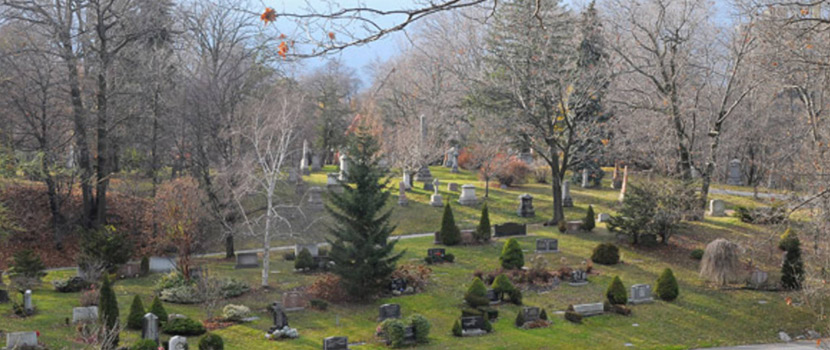
Unlike most invasive species, eastern redcedar is a native plant. It has become an invasive species ever since Europeans settled Nebraska. The reason why it is an invasive is because it is highly susceptible to fire. Eastern redcedar is an evergreen tree that can grow to a height of 30 to 35 feet.